You probably take better care of your car than you do of one of the most sensitive parts of your body. You change the oil, check strange noises, and pay attention when something does not feel right. But when it comes to testicular health, you may not even know what normal feels like.
That can become a problem. If you notice scrotal heaviness, testicular discomfort, pelvic floor tension, a lump, or a change in your testicles, you need a baseline for comparison. Without knowing your normal anatomy, an important change can be much harder to spot.
The good news is that becoming familiar with your body does not have to be complicated. Gentle awareness of the scrotal area can help you recognize changes, while a testicular self-exam can help you notice warning signs that deserve medical attention.
Why Knowing What Your Testicles Normally Feel Like Matters
The biggest reason to regularly check your testicles is not massage. It is awareness. When you become familiar with the normal size, shape, and feel of your testicles and surrounding structures, you have a better chance of noticing when something changes. A new hard lump, swelling, tenderness, or change in size should not be ignored.
This is especially important because a painless testicular lump can be a sign of testicular cancer. Testicular cancer is often highly treatable, particularly when it is diagnosed early.
Your goal is not to diagnose yourself. Your goal is to recognize a change and know when it is time to have a healthcare professional examine it.
How the Cremaster Muscle Can Affect the Scrotum and Testicles
Your testicles are surrounded and supported by several tissues and muscles. One important muscle involved in this area is the cremaster muscle.
You have probably noticed its effects without knowing its name. When you get cold or are startled, your testicles may pull closer to your body. The cremaster muscle helps produce this reflex.
Temperature matters when examining your testicles because cold temperatures can cause the scrotum to tighten and the testicles to rise. That makes the structures more difficult to examine.
For this reason, checking your testicles when your scrotum is relaxed, such as in a warm environment or after a warm shower, can make it easier to become familiar with your anatomy.
Scrotal Heaviness and Pelvic Floor Tension Should Not Be Ignored
You might occasionally notice heaviness, tension, aching, or discomfort in your scrotum, particularly after exercise or long periods of sitting.
There are many possible reasons for these symptoms. Pelvic floor tension, muscle problems, inflammation, infections, hernias, varicoceles, and other medical conditions can cause pain or heaviness around the groin and scrotum.
Because several conditions can produce similar symptoms, persistent discomfort should not simply be treated as muscle tightness.
If the feeling continues, gets worse, or comes with swelling, a lump, urinary symptoms, fever, or other changes, you should talk with your healthcare provider.
Can Gentle Scrotal Massage Improve Testicular Health?
You may hear claims that scrotal massage increases circulation, improves lymphatic drainage, or provides other health benefits. Evidence supporting massage itself as a preventive treatment for testicular disease is limited.
The more useful benefit of gently handling the area is that it can help you learn what your anatomy normally feels like.
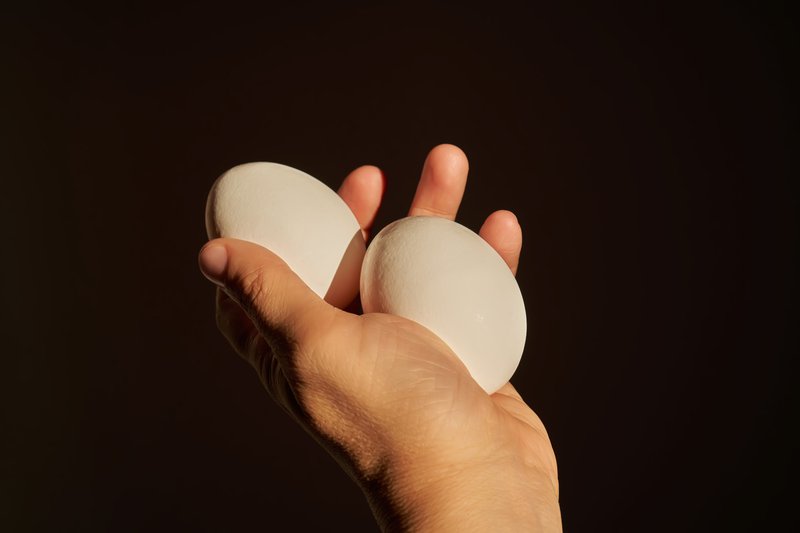
If you choose to gently manipulate the surrounding scrotal tissue, the pressure should remain very light. Think about checking the ripeness of a tomato or holding an egg without crushing it. You should never aggressively squeeze or deeply massage a testicle.
If touching the area causes sharp pain, nausea, significant tenderness, or another unusual symptom, stop.
How to Perform a Testicular Self-Exam Safely
A testicular self-exam is about becoming familiar with your body and checking for changes. A warm shower or bath can help relax your scrotum, making the testicles easier to examine.
Using your thumb and fingers, gently feel one testicle at a time. Become familiar with its general size, shape, and consistency. Then compare what you feel with the other side.
Your testicles do not have to be perfectly identical. One may naturally sit lower or be slightly different in size.
You may also feel soft structures behind and above the testicle, including the epididymis and spermatic cord. Learning that these normal structures exist can help prevent you from confusing them with a new lump.
You should not squeeze hard, dig into the tissue, or continue an examination that hurts.
The Spermatic Cord and Epididymis Can Feel Different From the Testicle
Understanding basic testicular anatomy makes a self-exam much easier.
The epididymis is a soft, coiled structure located along the back of each testicle. It is involved in sperm maturation and transport. Above the testicle is the spermatic cord, which contains structures including the vas deferens, blood vessels, nerves, and lymphatic vessels.
These structures normally feel different from the smooth surface of the testicle.
Your objective is not to memorize every part of your reproductive anatomy. You simply want to become familiar enough with your body to recognize a new or unusual change.
A Hard, Painless Testicular Lump Needs Medical Attention
One of the most important things to watch for during a testicular self-exam is a new hard lump or unusual area on a testicle.
A lump does not automatically mean you have cancer. Many scrotal masses have other causes. However, you cannot reliably determine the cause simply by feeling it yourself.
You should also pay attention to significant changes in the size, shape, or firmness of a testicle, unexplained swelling, persistent heaviness, or a dull ache in your groin or lower abdomen.
If something feels new or unusual, schedule an examination with your healthcare provider rather than waiting to see whether it disappears.
Sudden Testicular Pain Can Be a Medical Emergency
If you suddenly develop severe testicular pain, particularly with swelling, nausea, vomiting, or a testicle that appears higher than usual, seek urgent medical care. These symptoms can occur with testicular torsion, in which the spermatic cord twists and interferes with blood flow.
Testicular torsion requires prompt medical evaluation and treatment. Do not try to massage severe or sudden testicular pain away.
Testicular Cancer Awareness Starts With Knowing Your Normal
The most valuable habit you can develop is simple, pay attention to your body. You do not need to become obsessed with checking yourself. Instead, become familiar with how your testicles normally look and feel so a meaningful change stands out.
Although self-exams do not replace professional medical care or guarantee early cancer detection, body awareness can help you recognize symptoms worth discussing with your doctor.
If you discover a testicular lump, swelling, persistent ache, or significant change in size or shape, getting evaluated is far more useful than trying to diagnose the problem yourself.
Final Thoughts
You maintain the things that matter to you. Your health deserves the same attention. Learning what your testicles normally feel like can make you more aware of a new lump, swelling, persistent discomfort, or another unexpected change. Gentle self-awareness should never involve painful squeezing or aggressive massage, and it should never replace an evaluation when something seems wrong.
Most importantly, do not panic if you discover something unusual, but do not ignore it either. A healthcare professional can determine whether a change is harmless or needs further testing.
Your best tool is not complicated. Know what normal feels like, notice meaningful changes, and get medical help when something does not seem right.
Frequently Asked Questions (FAQs)
How do I know if a lump on my testicle is normal?
You may normally feel structures such as the epididymis behind your testicle, but a new hard lump or significant change should be evaluated by a healthcare professional. You cannot reliably diagnose a testicular lump by touch alone.Should I massage my testicles to improve blood flow?
There is limited evidence that testicular or scrotal massage provides preventive health benefits by increasing blood flow. If you handle the area, keep the pressure gentle and stop if you experience pain, nausea, swelling, or significant tenderness.What should I do if I suddenly have severe testicular pain?
You should seek urgent medical care for sudden, severe testicular pain, especially when it occurs with swelling, nausea, vomiting, or a change in testicle position. Testicular torsion is one possible cause and requires prompt treatment.How can I tell if my testicles have changed?
You can become familiar with the usual size, shape, position, and feel of each testicle so that new changes are easier to notice. If you find a new lump, swelling, unusual firmness, or persistent ache, contact your healthcare provider.Can pelvic floor tension cause discomfort around my testicles?
Pelvic floor problems can contribute to pain or tension in the pelvic and genital area, but testicular discomfort has many possible causes. If your symptoms are persistent, severe, or accompanied by swelling or a lump, get a medical evaluation.
Additional Resources
Curious about how you can boost your bedroom game and build lasting confidence? Check out the Get Wood Now Boost course and start your journey to feeling like yourself again!
Ready to take control of your penile health? Enhance blood flow, prevent atrophy, and ensure long-term functionality with the penis pump. So, don’t wait – invest in your health today and experience the benefits! Click here to purchase your pump now!
Join me on a sexual revolution to empower men and women to regain our sexual power. The Modern Man Club is a place where I share my research-based secrets for sexual performance without medication or surgery.
The book is the 5 Common Costly Mistakes Men Make When Facing ED. This is how you can have a rock-hard erection, enjoy more sex, be confident in demand, and improve your intimacy without ED medication. Uncover it all in my FREE eBook available to download now: The 5 Common Costly Mistakes Men Make When Facing Erectile Dysfunction.